_edited.png)
Does Aesthetic Treatment Hurt? Pain Levels Explained for Every Treatment
Thinking about having an aesthetic treatment but worried it might hurt? Youre
not alone.
One of the most common questions we hear at David Brown Hairdressing &
Aesthetics is, 'How painful is it?'
The truth is that most aesthetic treatments are far more comfortable than people
expect. Everyone experiences pain differently, but modern techniques, high-quality
products and effective numbing creams mean many treatments are only mildly
uncomfortable and last just a few minutes.
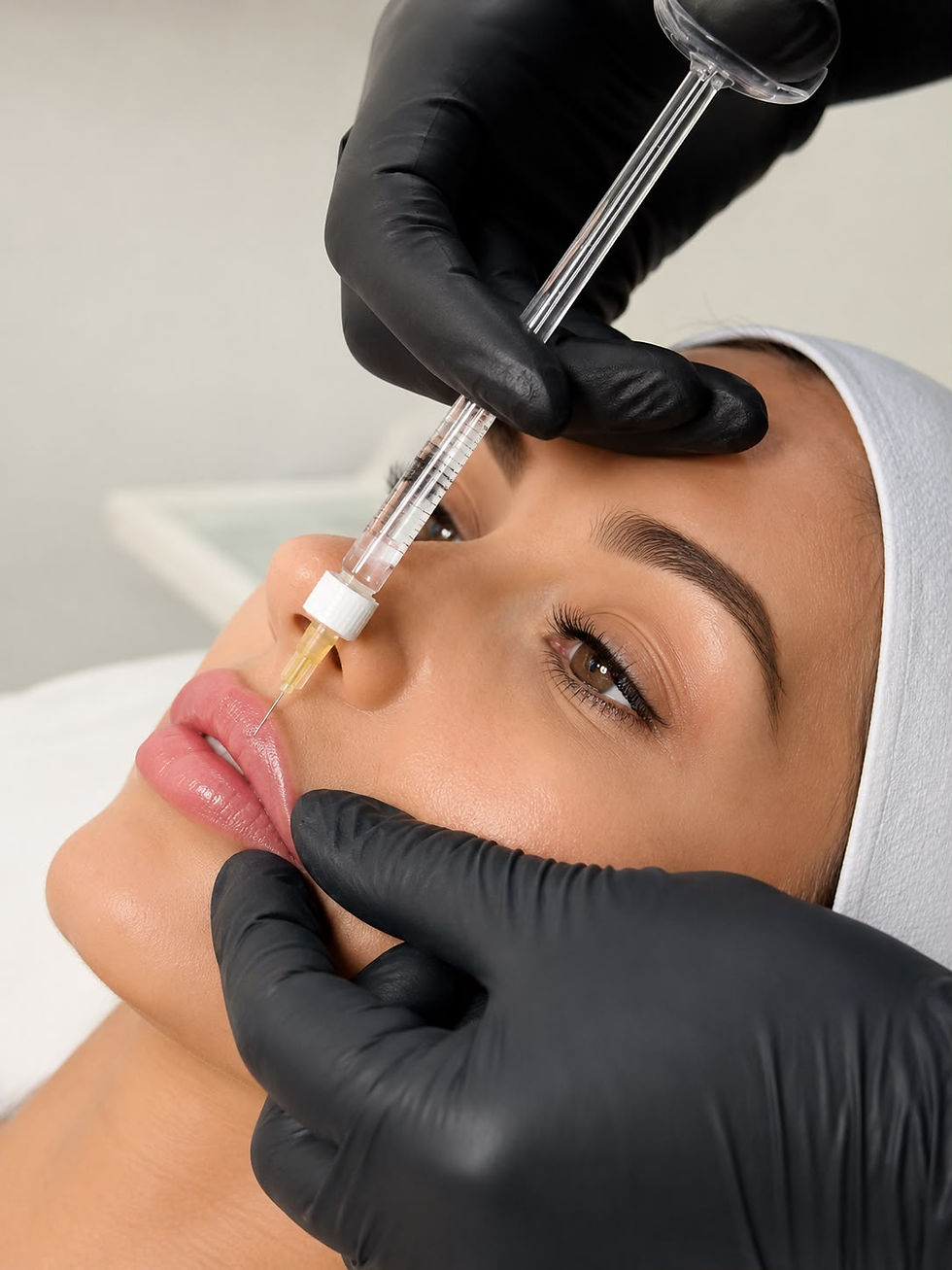
In this guide, we'll explain what each treatment feels like, provide a simple pain
rating, and share tips to help you feel as comfortable as possible.
Everyone Experiences Pain Differently
Pain is very personal. What one person describes as a slight scratch, another may
find more uncomfortable.
Several factors affect how a treatment feels, including:
Your natural pain tolerance
The treatment area
Your stress or anxiety levels
Hormonal changes
Whether numbing cream is used
The experience of your practitioner
It's also worth remembering that most aesthetic procedures are completed within
15–45 minutes, so any discomfort is usually very short-lived.
Pain Ratings Explained
The ratings below are based on what most clients report after treatment.
0/10 – No discomfort
1–3/10 – Mild discomfort
4–6/10 – Noticeable but manageable
7–10/10 – More uncomfortable but usually short-lived
Pain rating: ⭐⭐☆☆☆ (2/10)
Anti-wrinkle injections are one of the least painful cosmetic treatments available.
Most clients describe the sensation as a tiny pinprick that lasts just a second. The
needles used are extremely fine, and the injections themselves take only a few
minutes.
Most people are pleasantly surprised by how easy the treatment is.
Pain rating: ⭐⭐⭐⭐☆ (4–5/10)
Lips are naturally more sensitive because they contain many nerve endings.
Fortunately, most modern fillers contain lidocaine, a local anaesthetic that begins
working during treatment. We also apply a prescription-strength numbing cream
beforehand to improve comfort.
Many clients say the anticipation is worse than the treatment itself.
Afterwards, tenderness and swelling are normal for a few days.
Pain rating: ⭐⭐☆☆☆ (2–3/10)
Cheek filler is often more comfortable than clients expect.
The cheeks contain fewer sensitive nerve endings than the lips, and many
practitioners use a blunt cannula, which can reduce discomfort and bruising.
Most clients only experience a feeling of pressure rather than pain.
Pain rating: ⭐⭐⭐☆☆ (3/10)
The chin can feel slightly sharper than the cheeks but remains very manageable.
You may notice pressure while the product is placed, but discomfort usually lasts
only seconds.
Pain rating: ⭐⭐⭐☆☆ (3–4/10)
Jawline filler often feels like pressure rather than pain.
Some areas close to the jawbone can feel more sensitive, but the treatment is
generally well tolerated.
Pain rating: ⭐⭐⭐☆☆ (3–4/10)
Skin boosters involve multiple tiny injections across the treatment area.
Although you'll feel several small injections, numbing cream significantly reduces
discomfort.
Most clients describe the treatment as mildly uncomfortable rather than painful.
Pain rating: ⭐⭐⭐⭐☆ (4/10)
Polynucleotide treatments are becoming increasingly popular for improving skin
quality and stimulating collagen production.
The injections can feel slightly stingy, particularly around delicate areas such as
under the eyes.
Using numbing cream helps make the treatment much more comfortable.
Pain rating: ⭐⭐⭐☆☆ (3/10)
Microneedling sounds intimidating, but most clients find it surprisingly comfortable.
Before treatment, numbing cream is applied for around 20–30 minutes.
Most people describe the sensation as light scratching across the skin.
After treatment, your skin may feel similar to mild sunburn for the rest of the day.
Pain rating: ⭐⭐⭐⭐☆ (4–5/10)
Radiofrequency microneedling combines tiny needles with heat energy to stimulate
collagen production.
Because of the additional heat, it can feel more intense than traditional
microneedling.
However, numbing cream makes a significant difference, and most clients tolerate
the treatment very well.
The results are often worth the temporary discomfort.
Pain rating: ⭐⭐⭐☆☆ (3–4/10)
PRP involves taking a small blood sample before injecting your own concentrated
platelets back into the treatment area.
The blood test feels similar to a routine blood draw, while the facial injections are
generally mild with numbing cream.
Pain rating: ⭐⭐⭐⭐⭐ (5–6/10)
Fat dissolving injections are usually one of the more uncomfortable treatments.
Many clients experience a burning or stinging sensation that lasts for several
minutes after treatment.
This feeling settles naturally as the product begins working.
Swelling afterwards is completely normal and expected.
PDO Thread Lifts
Pain rating: ⭐⭐⭐⭐⭐ (5–6/10)
PDO threads are performed using local anaesthetic to maximise comfort.
You may feel pressure, tugging or movement beneath the skin rather than sharp
pain.
Although the procedure is more involved than injectable treatments, most clients
report that it is much easier than they expected.
Does Numbing Cream Really Help?
Absolutely.
Professional-grade numbing cream can significantly reduce discomfort during many
procedures, including:
Lip filler
Microneedling
RF Microneedling
Polynucleotides
Skin boosters
Fat dissolving injections
This allows treatments to be carried out much more comfortably.
Tips to Make Your Treatment More Comfortable
Before your appointment:
Stay well hydrated.
Eat a light meal beforehand.
Avoid alcohol for at least 24 hours.
Try to avoid excessive caffeine if you feel anxious.
Arrive feeling relaxed and allow enough time so you're not rushing.
If you're nervous, let your practitioner know. We can explain each step as we go,
helping you feel more at ease throughout your treatment.
What About Afterwards?
It's normal to experience some temporary side effects after aesthetic treatments,
including:
Mild tenderness
Redness
Swelling
Small bruises
Tightness
These effects are usually temporary and settle within a few days, depending on the
treatment.
Your practitioner will provide personalised aftercare instructions to help support your
recovery.
Frequently Asked Questions
Which treatment hurts the most?
Fat dissolving injections and PDO thread lifts are generally reported as the most
uncomfortable, although both are usually very manageable with appropriate pain
management.
Is Botox painful?
Not usually. Most people describe it as a tiny scratch that lasts only a second or two.
Is lip filler worse than Botox?
Yes. Lip filler is typically more uncomfortable because the lips are highly sensitive,
but numbing cream and lidocaine make a big difference.
Can I ask for numbing cream?
Yes. We routinely use numbing cream where appropriate to maximise your comfort.
Will I be sore afterwards?
Some tenderness is normal after many treatments, but this is usually mild and short-
lived.
Ready to Take the Next Step?
At David Brown Hairdressing & Aesthetics, your comfort is just as important as
your results. We take the time to explain every procedure, answer your questions
and use techniques designed to make your treatment as comfortable as possible.
Whether you're considering anti-wrinkle injections, dermal fillers, skin rejuvenation or
advanced collagen-stimulating treatments, we're here to guide you every step of the
way.

